





BUILDING MAINTENANCE
WHAT IS INCLUDED
OUR SERVICE FAQs


Building Maintenance Services Across Ontario
Commercial buildings require ongoing attention as occupancy, daily use, weather, age, and operating conditions affect different areas of the property.
Some maintenance requirements develop gradually, while others become apparent through inspections, tenant observations, recurring service history, or changes in how the building is used.
Master Maintenance provides building maintenance services across Ontario for commercial buildings, office properties, retail plazas, warehouses, industrial properties, and other business facilities.
We work with property owners, facility managers, property managers, and property management companies to coordinate physical building upkeep around property conditions and operational requirements.
Effective building maintenance is not simply a collection of unrelated service calls. Recurring needs, developing conditions, preventive work, exterior requirements, interior areas, and seasonal priorities can all influence the maintenance strategy for a commercial building.
A structured approach gives owners and managers a clearer way to determine what requires attention, what should continue to be monitored, and how individual maintenance activities fit into the longer-term care of the property.
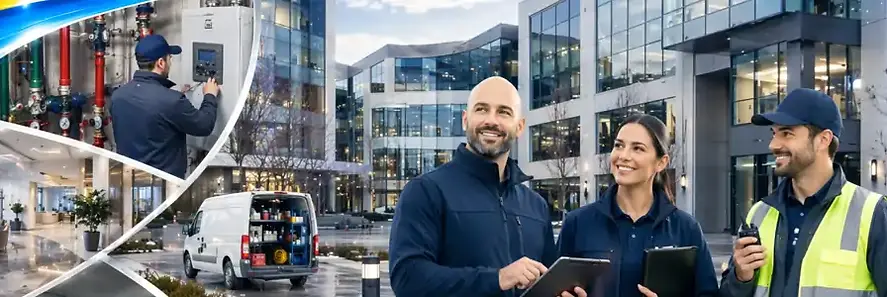
Building Maintenance Experts


What Are Building Maintenance Services?
Building maintenance services support the ongoing physical condition and upkeep of commercial properties.
The specific requirements depend on the building, its age, occupancy, use, operating environment, and the responsibilities established for the property.
Maintenance can include recurring building requirements, attention to appropriate interior and exterior areas, inspections, preventive work, seasonal services, and responses to developing property conditions.
The objective is not to treat every observation as the same type of maintenance problem. Some conditions may require routine service, others may warrant monitoring, and certain situations may require a different or more specialized response.
Understanding these distinctions helps property managers direct maintenance resources more appropriately while developing a clearer history of how the building changes over time.
Commercial Building Maintenance
Commercial building maintenance needs to account for both the physical property and the people and businesses using it.
An office building can contain employees, tenants, visitors, and shared areas operating on relatively predictable schedules.
A retail property can experience customer traffic throughout the day. Warehouses and industrial buildings may operate around loading activity, commercial vehicles, equipment, and extended working hours.
These differences affect maintenance priorities and scheduling.
A building may require attention, but completing that work during an unsuitable operating period can create unnecessary interference. Maintenance planning should therefore consider access, occupancy, tenant activity, and property operations alongside the physical work itself.
Master Maintenance coordinates commercial building maintenance around these practical conditions so ongoing upkeep remains connected to how the property is actually used.
Building Maintenance for Property Management Companies
Property management companies often oversee buildings with different ages, tenants, operating schedules, conditions, and maintenance histories.
Maintaining those properties requires enough consistency to keep the portfolio organized while preserving the flexibility to address individual building requirements.
Master Maintenance provides physical building maintenance for properties managed by commercial property management companies. Individual sites can receive maintenance according to their own condition and operating requirements while communication, scheduling, and service expectations remain organized across the portfolio.
This approach can be useful when a property manager is responsible for office buildings, retail plazas, commercial buildings, warehouses, and industrial properties that do not share identical maintenance needs.
Master Maintenance focuses on maintaining the physical property. Administrative property management responsibilities such as leasing, rent collection, tenant administration, and financial management remain with the property management organization.
Preventive Building Maintenance
Preventive building maintenance helps owners and managers identify recurring requirements and developing property conditions before maintenance becomes entirely reactive.
The objective is not to perform work simply because a predetermined interval has arrived. Preventive maintenance should use building conditions, service history, inspections, seasonal patterns, and recurring observations to help determine where attention is appropriate.
For example, a condition that repeatedly develops in the same area may justify a different maintenance schedule or further evaluation. Another area may remain stable and require less frequent attention than originally anticipated.
Over time, this information can create a more useful maintenance history for the building. Property managers can make decisions with greater context rather than treating each maintenance request as an isolated event.
For the broader preventive framework, see Preventive Commercial Property Maintenance.
Building Inspections and Condition Monitoring
Regular observation provides important information about the changing condition of a commercial building. Inspections can help identify developing maintenance requirements, recurring concerns, seasonal changes, and areas that should continue to be monitored.
The value of an inspection is not limited to finding something that requires immediate work. Documenting stable conditions can also provide useful context when those areas are reviewed later.
Condition monitoring becomes particularly valuable as buildings age or experience changes in occupancy and use. A property that receives more traffic, adds tenants, changes operating hours, or undergoes modifications may develop maintenance requirements different from those established under previous conditions.
Property managers can use inspection findings alongside service history to establish priorities and determine appropriate next steps.
Learn more through Commercial Property Inspections.
Interior Building Maintenance
Interior areas of commercial buildings experience daily occupancy, movement, shared use, and normal wear. Their maintenance requirements can differ according to the type of property and the activities occurring inside it.
Office buildings may contain shared areas serving several tenants. Retail properties can experience extended public traffic. Warehouses and industrial facilities may have interior areas connected closely with operational activity.
Building maintenance should account for these differences when determining service timing and priorities. Work in occupied areas may need to be coordinated around employees, tenants, customers, visitors, and normal business activity.
Interior conditions should also be considered alongside the rest of the building rather than treated as an entirely separate maintenance system.
Detailed information is available through Interior Property Maintenance.
Exterior Building Maintenance
Commercial buildings are continually exposed to weather and environmental conditions. Exterior surfaces, glass, entrances, surrounding areas, and other building features can change through seasonal exposure, traffic, property use, and normal aging.
Exterior building maintenance should respond to the condition of the property rather than assuming every exterior area requires identical service or frequency.
Some requirements may be recurring, while others are seasonal or condition-based. Observations made during inspections can also influence whether cleaning, maintenance, monitoring, or another response is appropriate.
Coordinating exterior requirements with the wider building maintenance strategy gives owners and managers a more complete understanding of the property.
See Exterior Property Maintenance for the dedicated exterior framework.
Building Maintenance for Office Properties
Office buildings need maintenance that supports employees, tenants, visitors, and clients while maintaining the physical condition of the property.
Occupancy patterns can help determine appropriate service timing. Entrances and common areas may experience concentrated use during arrival and departure periods, while maintenance affecting shared areas can influence several tenants simultaneously.
Multi-tenant office buildings can therefore require additional coordination. Property managers need to consider access, tenant schedules, shared spaces, exterior conditions, and recurring building requirements within the same maintenance strategy.
Master Maintenance supports office properties with building maintenance planned around the condition and use of the site rather than relying on a standardized schedule for every professional building.
Explore Office Buildings.
Building Maintenance for Retail Properties
Retail buildings and plazas combine tenant operations with customer traffic, deliveries, parking activity, and highly visible property areas.
Maintenance requirements can change according to the type of tenants, business hours, customer volume, seasonal activity, and the physical configuration of the property. Shared areas may also serve several businesses with different operating schedules.
Scheduling is particularly important in retail environments. Maintenance that can be completed with minimal effect during a quieter period may become unnecessarily disruptive during peak customer activity.
A building maintenance plan should therefore consider both physical conditions and the commercial environment in which the work occurs.
See Retail Plazas for property-specific maintenance considerations.
Building Maintenance for Commercial Properties
Multi-tenant and single-occupant commercial buildings can contain a wide range of businesses and property configurations. Building age, occupancy, traffic, exterior exposure, shared areas, and operating schedules can all influence maintenance requirements.
Recurring building maintenance helps owners and managers maintain awareness of these conditions rather than relying exclusively on individual service requests.
For multi-tenant properties, common building areas can require particular attention because their condition affects several occupants. Communication and scheduling may also need to account for different tenant operations.
Master Maintenance works with commercial property owners and managers to develop physical maintenance requirements around the individual building and its use.
The broader property-type framework is available through Commercial Buildings.
Building Maintenance for Industrial Properties and Warehouses
Industrial buildings and warehouses can experience maintenance conditions influenced by loading operations, commercial vehicles, equipment, employee shifts, shipping and receiving, and extended operating schedules.
These activities can affect both building conditions and the practical timing of maintenance.
Work around loading environments or operational access areas may require coordination with facility schedules. Other building areas may experience different levels of wear or environmental exposure according to how the property functions.
Maintenance planning should recognize these differences instead of applying conventional office-building assumptions to industrial environments.
Master Maintenance supports the physical upkeep of industrial and warehouse properties according to site conditions, operating requirements, and maintenance priorities.
Learn more about Industrial Properties.
Building Maintenance Within Facility Operations
Building maintenance and facility maintenance are closely related, but they serve different levels of the maintenance strategy.
Building maintenance concentrates on the physical condition and ongoing upkeep of the building and associated property areas. Facility maintenance places additional emphasis on coordinating maintenance around the operations, access requirements, occupancy, and activities occurring at the site.
Understanding both perspectives can help managers determine not only what physical work is required, but also how that work can be coordinated within an active commercial environment.
This distinction is especially relevant for warehouses, industrial facilities, large commercial properties, and other sites where maintenance activities regularly interact with business operations.
For the operations-focused framework, see Facility Maintenance Services.
Coordinating Building Maintenance Within a Maintenance Program
Commercial buildings rarely require every maintenance activity at the same frequency. Some needs recur regularly, others develop seasonally, and certain conditions require attention only when observations indicate that work is appropriate.
A structured program can help coordinate these different requirements while allowing individual activities to retain suitable schedules.
Property managers can establish recurring expectations, document observations, account for building access and occupancy, and periodically review whether existing service frequencies continue to reflect property conditions.
For portfolios containing several commercial buildings, this structure can also create consistency in maintenance administration without forcing every property into an identical scope.
Master Maintenance coordinates recurring maintenance around the requirements of individual properties and the priorities established for their ongoing care.
Learn more through Maintenance Programs.
Frequently Asked Questions
Q: What is included in commercial building maintenance?
A: Commercial building maintenance can include planned, recurring, seasonal, preventive, and condition-based services supporting the physical upkeep of a commercial property. Depending on the building and agreed scope, this can involve appropriate interior and exterior areas, inspections, cleaning-related services, seasonal requirements, and other maintenance activities suited to the property.
Q: How often should a commercial building receive maintenance?
A: There is no single maintenance frequency suitable for every commercial building. Scheduling can depend on property age, occupancy, traffic, operating hours, environmental exposure, seasonal conditions, maintenance history, and the individual services required. Some activities may follow recurring schedules, while others should respond to observed conditions.
Q: Can building maintenance be coordinated across multiple commercial properties?
A: Yes. Property management companies can coordinate maintenance across multiple buildings while maintaining property-specific scopes. Communication, scheduling, service expectations, documentation, and review can follow an organized process while individual properties receive maintenance based on their condition, use, and operating requirements.
Q: Does Master Maintenance provide building maintenance across Ontario?
A: Yes. Master Maintenance provides building maintenance services for commercial and industrial properties across Ontario, including offices, retail properties, commercial buildings, warehouses, and industrial facilities. Property owners, facility managers, and property management companies can Request a Building Maintenance Quote to discuss the building, maintenance priorities, operating requirements, and appropriate service scope.
Commercial buildings require maintenance strategies that can respond to physical conditions, occupancy, property use, seasonal exposure, and changing operating requirements.
Master Maintenance provides building maintenance services across Ontario for owners, facility managers, property managers, and property management companies responsible for offices, retail properties, commercial buildings, warehouses, industrial facilities, and multi-property portfolios.
By coordinating recurring upkeep, preventive attention, inspections, specialized services, and condition-based maintenance around the individual property, Master Maintenance supports a more organized approach to the ongoing physical care of commercial buildings.