


INTERIOR MAINTENANCE
BUILDING SPACES & AREAS
OUR SERVICE FAQs


Interior Property Maintenance for Commercial Properties
The interior condition of a commercial property depends on consistent attention to the physical areas, components, and shared spaces that support everyday building use.
Entrances, corridors, stairways, common areas, doors, walls, ceilings, fixtures, and other maintainable building elements can all develop requirements through normal use, age, occupancy, and changing property conditions.
Master Maintenance provides interior property maintenance for commercial buildings and properties across Ontario. We work with property managers, property management companies, building owners, and facility teams that need a structured approach to maintaining the physical condition of commercial interiors.
Interior maintenance is most effective when it is connected to the broader requirements of the property. A recurring condition in an entrance may relate to traffic and exterior exposure. Physical deterioration in a common area may indicate a preventive maintenance requirement.
A minor repair identified during routine work may need to be documented for follow-up. Changes in occupancy or building use can also affect maintenance priorities. For this reason, Master Maintenance approaches commercial interiors as part of the property's overall physical maintenance strategy.
The objective is to identify requirements, organize appropriate work, coordinate maintenance around building use, and help the people responsible for the property maintain functional and presentable commercial interior areas over time.
[H2] Interior Maintenance Requirements in Commercial Properties
Commercial interiors experience different maintenance demands according to the type of building, occupancy, traffic, configuration, age, and use of the property.
A multi-tenant office building may contain common entrances, corridors, stairways, shared access areas, and other building spaces used throughout the business day. A commercial building with one primary occupant may have a different division of maintenance responsibility.
Retail, industrial, and other commercial properties can introduce additional requirements based on how interior spaces connect with the surrounding site and daily operations. The maintenance scope should therefore be based on the actual property.
Master Maintenance incorporates interior requirements into a broader strategy for maintaining the physical condition of commercial properties so that interior work is not treated as a disconnected collection of tasks.
Physical maintenance requirements can develop gradually. Repeated contact can affect doors, walls, hardware, and other building components. High-traffic areas may experience greater wear than less frequently used portions of the property.
Seasonal conditions can influence entrances and transition areas. Minor physical damage can also occur during normal building activity, deliveries, tenant changes, or other site operations.
The appropriate response depends on the nature of the condition. Some requirements can be addressed through routine maintenance. Others may require repair, additional assessment, monitoring, or coordination with another responsible party.
Conditions outside the agreed maintenance scope can be communicated to the property representative so an appropriate decision can be made. This helps maintain a clear division of responsibility while ensuring that observable physical issues are not unnecessarily overlooked.
Interior property maintenance should also account for occupancy. Commercial buildings remain active while maintenance is being performed. Employees, tenants, visitors, contractors, deliveries, and building operations can influence when and how work should occur.
Planning around those conditions can help reduce unnecessary interference while allowing required physical maintenance to move forward.
Interior Property Maintenance
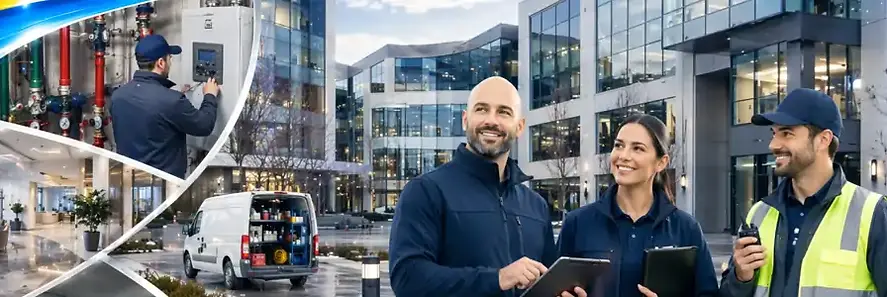


Common Areas, Entrances, Corridors, and Shared Building Spaces
Common areas are among the most consistently used portions of many commercial buildings.
Entrances create the transition between exterior and interior areas.
Corridors connect occupants with offices, suites, stairs, elevators, and other destinations. Stairways and shared access areas support movement throughout the property. Multi-tenant buildings can have additional common spaces that fall under the responsibility of the building owner or property manager.
The physical condition of these areas can affect how the entire property is experienced.
Interior property maintenance can address maintainable components and observable physical conditions within shared spaces according to the agreed scope.
This may include attention to walls, doors, trim, ceilings, hardware, fixtures, minor physical deficiencies, and other building elements appropriate for routine maintenance. Entrances deserve particular consideration because they are affected by both interior use and exterior conditions.
Weather, pedestrian traffic, seasonal exposure, deliveries, and repeated door operation can create recurring requirements. A condition that develops near an entrance may therefore need to be considered alongside maintenance of exterior areas surrounding commercial buildings.
This interior-exterior relationship is important.
A commercial property is not divided into completely independent maintenance environments simply because one area is inside and another is outside. Entrances, vestibules, loading access points, service doors, and other transition areas connect the two.
Coordinating those requirements can help property managers avoid fragmented maintenance decisions.
The same principle applies to common areas elsewhere in the building.
If repeated physical deterioration appears in the same location, simply addressing the visible condition each time may not be enough. The recurrence can be documented and considered during future maintenance planning.
That creates a more useful maintenance history and allows the responsible property representative to decide whether the condition requires a different approach.
Master Maintenance focuses on maintaining the physical condition of these commercial interior areas within the defined property scope.
Inspections, Preventive Planning, and Interior Repairs
Routine observations can provide valuable information about the condition of commercial interiors. A minor issue may be straightforward to address when first identified but become more disruptive if it continues to develop.
Repeated observations can also reveal patterns that are difficult to recognize when individual maintenance requests are considered separately. A structured approach to identifying observable conditions throughout a commercial property can support better interior maintenance decisions.
Interior observations may involve walls, ceilings, doors, hardware, common areas, entrances, shared access points, visible building components, and other areas included within the applicable scope. Not every observation requires immediate work.
Some conditions may be monitored. Others can be included in an upcoming maintenance cycle. A physical deficiency may require repair. A recurring issue may indicate that the existing maintenance approach should be reconsidered. These decisions connect interior observations with planning maintenance before recurring property conditions become more disruptive.
Preventive interior maintenance is particularly useful where a requirement is predictable.
If a component repeatedly requires attention, its condition can be reviewed before failure or more significant deterioration occurs. If a high-traffic area consistently experiences physical wear, maintenance can be planned around that pattern.
If seasonal conditions repeatedly affect a particular entrance, the requirement can be considered before the next seasonal transition. This does not mean every future repair can be predicted. Preventive maintenance provides a framework for known and observable requirements.
Unexpected conditions can still occur, and some building components may require specialists outside the normal maintenance scope. The objective is to reduce unnecessary reliance on purely reactive maintenance where practical.
Minor interior repairs can also form part of the broader building-maintenance process where the work is appropriate to the agreed scope. The distinction between routine maintenance and more substantial repair requirements should remain clear.
If a condition requires specialized assessment, regulated work, major reconstruction, or another trade outside the scope, the property representative can be informed so the appropriate resource can be engaged. Master Maintenance supports the maintenance process without overstating the role of routine property maintenance.
Recurring Interior Maintenance and Building Coordination
Commercial interiors can benefit from recurring maintenance schedules where requirements are predictable. A property manager may know that certain building areas require regular physical attention because of traffic, occupancy, previous maintenance history, or recurring conditions.
Other requirements may be periodic rather than frequent. These different needs can be organized through recurring maintenance schedules based on individual property requirements. A structured schedule helps establish expectations.
It can identify which interior areas are included, what maintenance is expected, how frequently recurring requirements should be addressed, and how additional conditions discovered during service should be communicated. The schedule should not prevent adaptation.
Commercial properties change over time. Tenants move. Building use changes. Occupancy increases or decreases. Renovations alter existing areas. New access patterns can place greater demand on particular portions of the property.
When those changes affect physical maintenance requirements, the program can be reviewed.
Coordination becomes especially important in occupied buildings. Maintenance may need to occur around tenant operating hours, building access, deliveries, scheduled events, contractors, or other activities.
In larger properties, facility teams may also have procedures governing access to specific areas or the timing of maintenance work. Master Maintenance can work within a facility-level approach that coordinates maintenance with building operations when the property requires that additional level of organization.
This remains a maintenance relationship.
The property manager, facility manager, building owner, or designated representative determines building priorities and operational requirements. Master Maintenance coordinates the agreed physical work around those requirements.
For building-focused needs, the interior maintenance scope can also connect with ongoing upkeep of physical commercial building areas and components. This creates a clear hierarchy.
Interior Property Maintenance focuses specifically on maintainable interior areas. Building Maintenance Services addresses the broader physical building service category. Facility Maintenance Services addresses coordination within the wider facility environment.
Commercial Property Maintenance connects those activities with the property as a whole.
Each page therefore serves a distinct purpose while supporting the same commercial maintenance framework.
Interior Maintenance Across Different Commercial Property Types
The way interior maintenance is planned should reflect the type of commercial property.
An office building may have entrances, corridors, stairways, shared access areas, and other common building spaces that experience recurring weekday traffic. Multi-tenant properties can have more complex divisions between landlord and tenant responsibilities.
Maintenance for office environments should therefore account for the areas included within the property-management scope rather than assuming responsibility for every interior space.
For property managers responsible for offices, the site's maintenance requirements for occupied commercial office buildings can provide the broader property-type context. Retail properties create different conditions.
A retail plaza may contain limited shared interior building space compared with a multi-story office building, but landlord-controlled areas, service access locations, common building components, and other physical requirements can still need maintenance. Retail activity can also create extended operating hours and frequent visitor movement that affect maintenance scheduling.
The broader property maintenance requirements of plazas and commercial retail sites should therefore be considered when interior work forms part of a retail property. Industrial properties introduce another operating environment.
Warehouses and light industrial properties can combine warehouse areas, offices, shared access points, service spaces, loading environments, and other building components. Maintenance planning may need to account for shifts, deliveries, equipment movement, controlled access, or operational areas.
Where appropriate, interior requirements can be coordinated with the physical maintenance needs of warehouses and industrial properties. Other commercial buildings may not fit neatly into a single property category.
The appropriate maintenance scope still follows the same principle: understand the physical property, establish the areas included in responsibility, identify recurring requirements, and coordinate work around actual building use.
Master Maintenance does not need every commercial interior to be identical in order to provide a structured maintenance process. The framework remains consistent while the individual scope changes according to the property.
Quality Control, Safety Awareness, and Long-Term Interior Condition
Commercial interior maintenance occurs within occupied environments, so work should be planned with awareness of the people and activities surrounding it. Employees, tenants, visitors, contractors, deliveries, and other building users can all affect access and scheduling.
Some work may require temporary control of a small area or coordination with the property representative before service begins. Master Maintenance incorporates practical health and safety considerations into commercial maintenance work within the applicable scope.
The exact requirements depend on the task and environment.
Safety awareness does not transfer the broader responsibilities of owners, employers, tenants, property managers, or other parties to the maintenance provider. It means the maintenance activity itself should be planned and performed with appropriate consideration for the commercial setting.
Quality review provides another layer of control.Recurring work should not simply be repeated indefinitely without considering whether it continues to address the property's needs.
A structured review of maintenance results and recurring property conditions can help determine whether the work, frequency, scope, or coordination needs adjustment.
For example, if a physical condition repeatedly returns in the same interior area, that information can be documented. If access limitations consistently interfere with work, scheduling may need to change. If a component shows increasing deterioration despite routine attention, the property manager may need to consider a different repair or replacement decision.
These observations can also contribute to longer-term property planning.
Commercial buildings contain interior components with different ages, expected service lives, maintenance histories, and levels of use. Recurring maintenance can provide information about how those physical components are changing.
Where appropriate, connecting maintenance observations with longer-term facility asset requirements can help responsible decision-makers consider present conditions alongside future needs. Master Maintenance provides the maintenance observations and services within scope.
Capital planning, budgeting, replacement decisions, and other ownership or management decisions remain with the appropriate property representatives. That distinction keeps the maintenance role clear while allowing information generated through routine work to remain useful.
Interior Property Maintenance for Property Managers and Portfolios
Property managers frequently need to coordinate interior maintenance across more than one area, tenant environment, building, or property. A single multi-tenant building can contain different common spaces with different levels of use.
A property management company may oversee several buildings with different ages, configurations, occupants, and maintenance histories. A building owner may need consistency across a portfolio without imposing an identical scope on every location. A structured process can help.
Master Maintenance uses a defined approach to property review, planning, service coordination, and follow-up to organize maintenance around the requirements of each property.
The process can remain consistent even when individual maintenance scopes differ.
One building may require substantial attention to shared corridors and entrances. Another may have relatively few common interior areas but recurring physical requirements around access points.
A third may combine office and warehouse environments with different maintenance priorities. The individual property determines the scope. For multi-property portfolios, this approach can make maintenance easier to understand and review.
Property managers can establish requirements by location, organize recurring work, receive relevant observations, and adjust maintenance as building conditions change.
It also supports clearer responsibility.
Master Maintenance provides commercial property maintenance services. Property managers and property management companies remain responsible for the broader management of the property, including tenant relationships, financial decisions, leasing, and other management functions.
Our role is to help maintain the physical commercial properties under their care.
This relationship can apply to a single commercial building or a portfolio containing different property types. The objective is the same: provide organized physical maintenance that reflects actual property conditions and supports the people responsible for maintaining those buildings over time.
Frequently Asked Questions
Q: What is included in commercial interior property maintenance?
A: Commercial interior property maintenance focuses on the physical condition of maintainable interior building areas included within the agreed scope. Depending on the property, this can involve entrances, corridors, stairways, common areas, doors, walls, ceilings, hardware, fixtures, minor physical repairs, and other building components. The exact scope depends on the property's configuration, occupancy, condition, responsibilities, and maintenance requirements.
Q: Can interior maintenance include minor building repairs?
A: Yes, appropriate minor physical repairs can be incorporated into an interior property maintenance scope. The suitability of the work depends on the condition and the type of repair required. Requirements involving specialized trades, regulated work, major reconstruction, or expertise outside the maintenance scope should be referred to the appropriate provider or professional.
Q: How does preventive maintenance apply to commercial interiors?
A: Preventive interior maintenance uses recurring observations, known maintenance requirements, previous property history, and predictable patterns of physical wear to plan appropriate work before conditions become more disruptive where practical. It can be particularly useful for high-use areas, entrances, shared building components, and physical conditions that have previously required recurring attention.
Q: Can Master Maintenance coordinate interior maintenance across multiple commercial buildings?
A: Yes. Master Maintenance can work with property managers, property management companies, building owners, and facility teams responsible for multiple commercial properties. Each building can have an interior maintenance scope based on its own physical requirements while using a consistent process for planning, scheduling, observations, quality review, communication, and follow-up.
Plan Interior Property Maintenance With Master Maintenance
Commercial interiors benefit from maintenance that connects physical building condition, common areas, preventive planning, minor repair requirements, recurring observations, and facility coordination within one structured approach.
Master Maintenance works with property managers, property management companies, building owners, and facility teams across Ontario to maintain the physical interior areas of commercial properties according to their actual condition and use.
Whether the requirement involves one building or a multi-property portfolio, maintenance can be organized around the priorities and responsibilities of each location.
To discuss your property and interior maintenance requirements, request an interior property maintenance quote.