





RETAIL MAINTENANCE
RETAIL REQUIREMENTS
OUR SERVICE FAQs


Retail Property Maintenance for Plazas Across Ontario
Retail properties require maintenance strategies built around active commercial environments.
Customers, tenants, employees, deliveries, vehicles, pedestrian traffic, seasonal conditions, and changing operating schedules all influence how a retail plaza should be maintained.
The property needs to remain functional and presentable while maintenance work is coordinated around the businesses operating there.
Master Maintenance provides retail property maintenance across Ontario for retail plazas, shopping plazas, neighbourhood commercial centres, multi-tenant retail properties, and other commercial retail sites.
We work with property managers, property management companies, building owners, facility teams, and other professionals responsible for maintaining commercial retail properties.
A successful retail maintenance plan considers the entire property rather than treating individual requirements as unrelated jobs.
Parking areas, pedestrian routes, entrances, exterior building areas, common spaces, loading zones, service areas, and seasonal requirements all contribute to the condition and operation of the site.
Our approach helps management teams organize recurring, preventive, seasonal, and condition-based maintenance according to the actual requirements of each retail property.
Retail Plazas
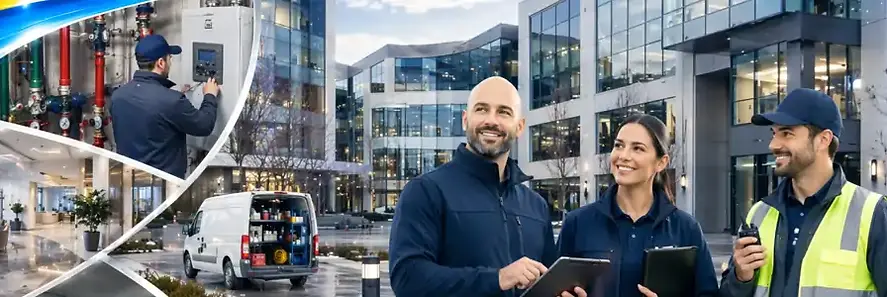


Retail Properties Have Distinct Maintenance Requirements
Retail properties differ from many other commercial environments because customers and tenants continually experience the condition of the site.
A retail plaza may remain active from early morning until late evening. Different tenants can operate on different schedules. Deliveries may occur while customers are present.
Parking areas experience continual vehicle turnover, while pedestrian routes and storefront approaches can remain busy throughout the day.
These conditions directly affect maintenance planning. Work that may be relatively straightforward at a quieter commercial property can require additional coordination at an active retail plaza.
Storefront access needs to be considered. Vehicle and pedestrian activity can affect when exterior work is practical. Loading and service areas may need maintenance coordinated around deliveries.
These individual requirements can be incorporated into a wider commercial property upkeep strategy rather than handled as disconnected service calls.
Master Maintenance considers physical property conditions together with how the retail environment operates.
This helps maintenance support the site without unnecessarily interfering with tenants, customers, deliveries, or normal commercial activity.
Maintenance for Multi-Tenant Retail Plazas
Multi-tenant plazas introduce additional maintenance considerations because several businesses share the same commercial environment. Individual tenants may be responsible for certain areas within their leased premises, while the property owner or property management company oversees common areas and broader site maintenance.
Responsibilities vary by property, but shared areas typically require coordinated physical upkeep. The maintenance scope should clearly identify which portions of the property are included. These may include parking areas, pedestrian routes, exterior common areas, shared access points, exterior building areas, loading zones, service spaces, and other areas maintained by ownership or management.
Where the focus involves the physical condition of the structures themselves, ongoing upkeep of commercial buildings can provide a supporting maintenance framework. The objective is not to make every area of the plaza receive identical attention. Different locations experience different levels of traffic, exposure, and operational demand. Maintenance should reflect those differences while remaining coordinated across the property.
Supporting Property Managers Responsible for Retail Sites
Property managers often coordinate many different requirements within a retail property.
They may communicate with tenants, schedule contractors, respond to changing property conditions, coordinate access, oversee budgets, and maintain broader operational continuity.
Master Maintenance supports these professionals by providing physical commercial maintenance within the agreed scope.
We are not a property management company and do not provide leasing, rent collection, tenant administration, or financial management. Our role is to help the professionals responsible for property management maintain the physical commercial environment.
For property management companies overseeing several retail properties, a consistent maintenance framework can make it easier to understand scheduled work, identify changing requirements, coordinate seasonal activity, and maintain continuity across multiple locations.
Consistency does not mean every property receives the same schedule. Scope and frequency should reflect property size, tenant activity, building configuration, traffic, exterior exposure, seasonal requirements, and actual site conditions.
Retail Plaza Inspections and Condition Awareness
Retail properties can change quickly because of the amount of daily activity occurring across the site. Regular awareness of property condition helps management teams identify developing concerns before they are overlooked.
A structured approach to reviewing observable property conditions can help identify maintenance priorities across relevant portions of the retail site.
That may include changes affecting exterior surfaces, building components, pedestrian routes, common areas, paved surfaces, entrances, or other locations within the maintenance scope.
The purpose is not simply to create a list of deficiencies.
Inspection information becomes most useful when it supports maintenance decisions.
Some conditions may require prompt attention. Others can be incorporated into a future maintenance cycle. Repeated observations may indicate that an existing service frequency or maintenance approach should be reconsidered.
For property managers, this creates a clearer relationship between what is happening at the site and how future maintenance priorities are established.
Preventive Maintenance for Retail Properties
Retail property maintenance should not depend entirely on problems becoming obvious or disruptive. A preventive approach helps property managers identify recurring requirements and organize appropriate maintenance before conditions become more difficult to address.
This can be supported through preventive planning for recurring property needs. At a retail plaza, preventive planning can be particularly useful because many areas experience continual use.
Entrances, pedestrian routes, parking areas, exterior surfaces, shared building areas, and service zones can gradually change through traffic, weather exposure, seasonal conditions, and normal property use.
Preventive maintenance does not mean performing unnecessary work.
It means understanding recurring needs, reviewing property conditions, and determining suitable timing based on what is actually happening at the site.
Master Maintenance incorporates preventive planning into the broader retail maintenance strategy rather than treating it as a separate activity disconnected from regular service.
Developing a Retail Plaza Maintenance Program
Recurring maintenance becomes easier to manage when requirements are organized into a clear structure. A retail property may have work requiring frequent attention, maintenance occurring periodically, services tied to seasonal changes, and condition-based work identified through inspections or ongoing observations.
These requirements can be organized through planned recurring service schedules. The appropriate program depends on the property.
A high-traffic plaza with a large parking area may require different service frequencies from a smaller neighbourhood retail site. A property with significant pedestrian activity may have different priorities from a retail centre where most activity is concentrated around vehicle access.
Seasonal exposure can also influence service frequency.
The objective is to establish enough structure that maintenance remains consistent while allowing the program to respond when property conditions change.
For property management companies overseeing several retail locations, this can provide a recognizable maintenance framework without forcing every property into an identical schedule.
Exterior Maintenance Around Retail Plazas
The exterior environment is a major component of retail property maintenance. Customers often experience the parking area, pedestrian routes, exterior building surfaces, and entrances before entering a tenant's premises. These areas are also continually exposed to traffic, weather, and seasonal conditions.
A broader approach to maintaining exterior commercial property areas can bring these requirements together within the retail maintenance plan. The exterior scope may include building surfaces, paved areas, entrances, pedestrian locations, loading areas, service zones, and other exterior portions of the property.
Different areas should be maintained according to how they are used. A primary pedestrian entrance may require a different approach from a rear service area. Parking areas can require recurring attention because of vehicle traffic and seasonal accumulation. Loading zones may need maintenance coordinated around deliveries.
Planning these activities together helps the exterior property function as a connected environment rather than a collection of unrelated spaces.
Parking Areas and Vehicle Traffic
Parking areas are central to many retail plazas. They accommodate customer vehicles, employee parking, deliveries, accessible routes, and movement between different areas of the site.
Their condition can influence both property presentation and everyday use.
Maintenance planning should consider traffic patterns, service timing, seasonal accumulation, weather exposure, and the ability to access different sections without creating unnecessary interference with retail operations.
Busy portions of a parking area may require different timing from lower-use sections.
Work may also need to be sequenced so tenants and customers retain practical access during maintenance.
This is one reason retail property maintenance should be planned around how the site operates rather than according to a schedule that ignores actual vehicle activity.
Pedestrian Areas, Entrances, and Storefront Environments
Pedestrian areas connect parking facilities, walkways, storefronts, building entrances, and other parts of a retail property. These locations can experience substantial traffic and remain highly visible throughout the operating day.
Maintenance planning should consider both their physical condition and how work may affect people using them. Storefront environments can be particularly sensitive to timing because tenant entrances need to remain reasonably accessible while maintenance is taking place.
The appropriate approach depends on the service and configuration of the property. Master Maintenance considers these areas within the broader retail maintenance plan so that work can be coordinated with surrounding property activity and other maintenance requirements.
Interior Common Areas at Retail Properties
Some retail properties contain interior common areas that remain under the responsibility of the building owner or property management team. These may include shared corridors, common entrances, service spaces, or other areas outside individual tenant premises.
Where physical upkeep is required within these spaces, maintenance of shared interior property areas can support their ongoing condition. Work should be coordinated around occupancy and normal property use.
Maintenance performed inside an active commercial environment can require different scheduling and access considerations from work occurring in a vacant or restricted location.
The objective remains to address physical maintenance requirements while recognizing how the space functions throughout the operating day.
Facility-Level Maintenance for Larger Retail Sites
Larger retail properties may benefit from a broader facility-oriented approach. Facility maintenance considers not only individual physical tasks but also how maintenance interacts with access, occupancy, operating schedules, tenants, deliveries, and other activities occurring at the site.
For properties where these operational considerations are especially important, coordinating maintenance around facility operations provides a broader framework.
At a retail property, this can involve tenant hours, delivery schedules, contractor activity, access restrictions, customer traffic, and the sequence of multiple maintenance activities.
Master Maintenance adapts maintenance planning to the property rather than assuming that the same operating approach will work at every retail location.
Window Washing for Retail Properties
Exterior glass contributes significantly to the appearance of many retail properties. For owner-managed or common areas within the agreed scope, exterior glazing maintenance for retail properties can be coordinated with the wider property maintenance plan.
Scheduling should consider pedestrian activity, storefront entrances, tenant operations, access requirements, and weather conditions. At multi-tenant properties, these considerations can differ from one part of the site to another.
Window washing is therefore most effective when planned in relation to the wider retail environment rather than handled without consideration for surrounding activity.
Power Washing for Retail Plazas
Exterior retail surfaces can accumulate material through weather, pedestrian activity, surrounding traffic, and normal commercial use.
Where suitable surfaces require more intensive washing, pressure washing suitable exterior surfaces can be incorporated into the property's broader maintenance plan.
Surface condition, surrounding activity, access, weather, drainage considerations, and tenant operations can all influence timing.
Coordinating this work with other exterior maintenance can also help establish a more logical service sequence and reduce unnecessary duplication.
Power Sweeping for Retail Parking Areas
Retail parking areas, drive lanes, and other suitable paved surfaces can accumulate sand, grit, leaves, litter, and loose debris.
The amount and type of accumulation can change through vehicle traffic, weather, winter operations, landscaping, and seasonal conditions.
Mechanical sweeping for retail parking and paved areas can support recurring maintenance of suitable vehicle areas.
Retail properties require careful scheduling because parking demand can vary considerably throughout the day and week.
Service timing should therefore consider vehicle activity and practical access to the sections being maintained.
Power sweeping can also support seasonal transitions when winter accumulation or changing environmental conditions affect paved areas.
Snow Removal for Retail Properties
Winter conditions can significantly affect retail operations in Ontario. Snow accumulation may influence parking availability, vehicle circulation, pedestrian movement, deliveries, entrances, and normal property access.
A planned approach to managing snow across active retail properties can be incorporated into the property's broader seasonal maintenance strategy.
Planning should consider parking areas, drive lanes, pedestrian routes, access points, snow-storage conditions, tenant activity, and changing weather.
Retail properties can be particularly demanding during winter because customer and tenant activity may continue throughout a snow event.
Winter maintenance therefore needs to account for an active commercial environment rather than assuming the property can remain unused until conditions improve.
Seasonal Retail Property Maintenance in Ontario
Retail property conditions change throughout the year. Spring can reveal accumulation and property conditions that developed during winter. Warmer months may provide appropriate opportunities for exterior work. Autumn can shift attention toward preparing exterior areas for colder weather. Winter introduces snow, ice, freeze-thaw cycles, and changing access conditions.
A year-round maintenance approach helps property managers anticipate these transitions.
Not every service needs to occur at the same frequency throughout the year.
Maintenance should respond to actual property conditions, traffic, weather exposure, seasonal demand, and tenant activity.
Retail properties can also experience seasonal periods of increased customer traffic. Holidays and other peak periods may influence when particular maintenance activities should be scheduled.
The objective is to align maintenance with both the physical property and the commercial environment.
Maintenance Around Deliveries and Service Areas
Retail properties frequently depend on deliveries and service access. Loading zones, rear service areas, delivery routes, utility locations, and other operational spaces can experience conditions substantially different from customer-facing portions of the property.
These locations should not be overlooked simply because they are less visible.
Commercial vehicle traffic, loading activity, surface wear, accumulation, and restricted access can all influence maintenance requirements.
Scheduling is especially important. Maintenance that conflicts with deliveries can create avoidable operational problems, while work attempted without awareness of vehicle movement may be difficult to complete effectively.
Master Maintenance considers service areas within the overall property plan while recognizing that their maintenance priorities and timing may differ from customer-facing areas.
Coordinating Maintenance With Tenant Operations
Retail plazas operate through the businesses occupying them. Tenant activity is therefore an important consideration when maintenance is scheduled. Different tenants may have different operating hours, delivery periods, peak customer times, access requirements, and storefront conditions.
Property managers and site contacts can provide important information about these activities.
Communication allows maintenance to be planned with greater awareness of how the property is operating. This does not mean every maintenance activity can avoid all interaction with normal property use. Active commercial environments inherently require coordination.
The objective is to plan work deliberately and reduce unnecessary disruption where practical.
Reviewing Maintenance Quality at Retail Properties
Recurring retail maintenance benefits from consistent review. Property conditions can change between visits, and maintenance requirements can evolve as traffic, tenants, weather, seasons, and site use change.
A process for reviewing service results and recurring conditions can help maintain continuity between maintenance cycles. Review can also indicate whether the current maintenance plan continues to reflect the needs of the property.
If a particular area repeatedly changes before the next scheduled visit, service frequency may warrant reconsideration. If access consistently prevents work in a particular location, scheduling or coordination may need to change.
The purpose of quality review is therefore broader than checking one completed task. It helps connect service experience with future maintenance decisions.
Health and Safety in Active Retail Environments
Retail maintenance frequently takes place around customers, employees, vehicles, tenants, contractors, and deliveries. Relevant health and safety considerations should therefore be incorporated into planning and service delivery.
A framework for planning maintenance around active-site safety considerations can help connect work areas, access, property activity, changing conditions, and the practical requirements of occupied commercial environments.
The appropriate considerations depend on the work being performed. Maintenance in a parking area presents different conditions from work near a storefront entrance. Exterior building work can involve different access requirements from maintenance inside a shared commercial space.
Planning should reflect the actual environment rather than relying on one approach for every property and service.
Retail Maintenance Across Multi-Property Portfolios
Property management companies may oversee several retail plazas or a mixed portfolio containing retail, office, commercial, warehouse, and industrial properties.
A consistent maintenance process can help create continuity across these locations.
Consistency does not require identical scopes.
One retail plaza may have a large parking area and substantial vehicle traffic. Another may have heavier pedestrian activity. A third may include more service areas or a different building configuration.
The maintenance framework can remain consistent while service frequencies and priorities change according to the individual property.
Master Maintenance works with Ontario property management teams to organize maintenance around specific site conditions while maintaining a practical approach across multi-property portfolios.
This can make it easier to identify changing priorities, coordinate recurring services, and understand how maintenance requirements differ between locations.
Retail Property Maintenance as Part of Long-Term Property Care
The condition of a retail property develops over time. Traffic, weather, building age, tenant turnover, renovations, seasonal exposure, and recurring use can all influence future maintenance requirements.
A long-term approach connects recurring service with condition awareness, inspection information, preventive maintenance, and adjustments to the maintenance plan.
Where broader information about property components needs to be considered over time, tracking physical asset condition over the long term can connect maintenance observations with the ongoing requirements of those assets.
Not every maintenance requirement will change frequently.
Some may remain stable for years, while others evolve as the property changes. The value of an ongoing approach is that those changes can be incorporated deliberately instead of allowing maintenance to become increasingly reactive.
Why a Structured Retail Maintenance Process Matters
Retail properties combine physical maintenance requirements with active commercial operations. That makes process important. Assessment establishes current conditions. Planning determines scope and priorities.
Scheduling considers tenant and customer activity. Service delivery addresses the work. Review identifies changing requirements. Communication connects those observations to the people responsible for the property.
Master Maintenance uses a structured approach to planning and coordinating maintenance
rather than treating every service as an unrelated visit.
For property managers, this creates a clearer framework for coordinating retail maintenance throughout the year.
It also allows specialized services, recurring maintenance, inspections, seasonal requirements,
Retail Property Maintenance Across Ontario
Recurring retail maintenance benefits from consistent review. Property conditions can change between visits, and maintenance requirements can evolve as traffic, tenants, weather, seasons, and site use change.
A process for reviewing service results and recurring conditions can help maintain continuity between maintenance cycles. Review can also indicate whether the current maintenance plan continues to reflect the needs of the property.
If a particular area repeatedly changes before the next scheduled visit, service frequency may warrant reconsideration. If access consistently prevents work in a particular location, scheduling or coordination may need to change.
The purpose of quality review is therefore broader than checking one completed task. It helps connect service experience with future maintenance decisions.
Frequently Asked Questions
Q: What does retail property maintenance include?
A: Retail property maintenance can include planned, recurring, preventive, seasonal, and condition-based upkeep for commercial buildings, exterior areas, parking environments, pedestrian locations, common areas, service zones, and other portions of the property within the agreed scope. Requirements depend on property size, configuration, traffic, tenant operations, seasonal exposure, and existing conditions.
Q: Can Master Maintenance work with property management companies overseeing multiple retail plazas?
A: Yes. Master Maintenance works with property managers and property management companies responsible for commercial properties across Ontario. A consistent maintenance process can be used across several retail locations while allowing each property's scope, schedule, and service frequency to reflect its individual requirements.
Q: How often should a retail plaza receive property maintenance?
A: There is no single frequency appropriate for every retail property. Maintenance intervals depend on traffic, property size, building condition, exterior exposure, seasonal conditions, tenant activity, service type, and maintenance history. Recurring observations can help determine whether existing frequencies continue to suit the property.
Q: Can retail maintenance be scheduled around customers and tenant operations?
A: Maintenance can often be planned with consideration for operating hours, customer activity, deliveries, parking demand, access requirements, and other known site conditions. Coordination with the property manager or designated site contact helps identify operational factors that should be considered before service begins.
Retail properties require maintenance that accounts for physical site conditions, tenant activity, customer access, seasonal demands, and the ongoing requirements of an active commercial environment.
Master Maintenance works with property managers, property management companies, building owners, and facility teams across Ontario to provide structured retail property maintenance for plazas and other commercial retail sites.
Whether the requirement involves one property or a multi-site portfolio, maintenance can be planned around the condition, operation, and priorities of each location. To discuss your property and maintenance requirements, request a retail property maintenance quote.