


Why Dirt and Grime Build Up on Commercial Properties
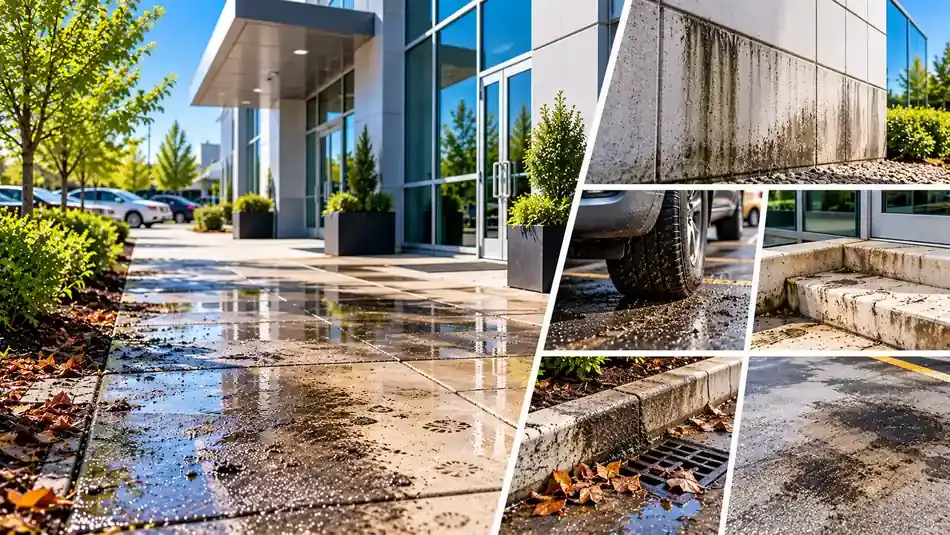
Dirt and grime buildup on commercial properties rarely develops evenly. One entrance can become visibly soiled while another remains relatively clean. A lower section of an exterior wall may darken faster than the surface above it, and pavement beside a busy vehicle route can change more quickly than an area only a short distance away.
These differences occur because exterior surfaces interact with their surroundings. Traffic, wind, rainfall, moisture, landscaping, nearby roads and the characteristics of the surface itself all influence what reaches an area and whether that material remains there.
Understanding these patterns helps Ontario property managers evaluate exterior conditions more accurately. When accumulated material is appropriate for washing and the affected surface is suitable, professional exterior washing for commercial properties can address buildup as part of ongoing exterior maintenance.
What Causes Dirt and Grime Buildup on Commercial Properties?
Dirt and grime buildup on commercial properties develops through a combination of environmental exposure and property activity. Airborne dust and soil can settle on walls and pavement. Vehicles can carry material onto parking areas and service routes. Pedestrian traffic can transfer dirt to entrance approaches, while rain can move material from one part of a surface to another.
The location of a surface determines how strongly these factors affect it. An exposed wall can receive wind-driven material that never reaches a protected area beneath an overhang. Pavement close to a road entrance may experience conditions that are different from a walkway inside the property. A shaded location can remain damp longer than an area receiving direct sunlight.
The surface itself also matters. Texture, orientation and surrounding details can influence whether material remains visible, moves away naturally or becomes concentrated over time.
Exterior grime is therefore better understood as the result of several property conditions working together rather than one universal source.
Traffic Can Move Exterior Material Across a Property
Commercial properties experience repeated movement by people, vehicles and equipment.
That activity can carry exterior material from one location to another. Pedestrians can track soil and residue toward entrances. Cars and trucks can transfer material onto parking and loading surfaces. Carts and service equipment can repeatedly travel across the same routes, creating recognizable patterns.
The effect is often strongest where movement becomes concentrated. An entrance approach can receive far more foot traffic than a secondary walkway. Vehicle entrances, turning areas and loading routes can experience repeated movement that quieter pavement does not.
Traffic can also combine with weather.
Material carried onto a paved area can be redistributed by rainfall, while dry conditions can allow dust to move again through vehicle activity or wind. These patterns help explain why two similar surfaces on the same property can develop visibly different levels of grime even though they are exposed to the same general climate.
Wind and Nearby Roads Can Increase Exterior Buildup
A commercial property's surroundings can influence how quickly exterior surfaces change.
Properties close to busy roads can receive airborne dust and fine material associated with surrounding traffic and activity. Wind can transport that material onto façades, pavement and sheltered corners. The effect depends partly on orientation.
One side of a building may face prevailing winds or a major roadway while another is protected by the building itself. Exterior surfaces facing an open parking area can also experience different exposure from surfaces enclosed by neighbouring structures or landscaping. Wind does not distribute material evenly. Corners, recesses and architectural details can interrupt airflow and create locations where material settles.
Other exposed surfaces may shed loose material more readily. This can produce distinct patterns across building elevations and exterior paved areas. Property managers who observe where buildup repeatedly appears can often connect those patterns to the property's orientation and surroundings rather than assuming every exterior area should develop grime at the same rate.
Rain Can Move and Concentrate Dirt
Rain can remove some loose exterior material, but it can also redistribute dirt and create visible patterns. Water moving across a surface can carry particles toward lower areas, edges, joints and drainage paths. Once the water evaporates or drains away, some material can remain behind. Building geometry affects this process.
Roof edges, projections, ledges and changes in façade design can influence where water travels. On pavement, slope and low points affect how rainwater moves across the property.
Repeated water movement can make certain areas noticeably different from surrounding surfaces. A wall beneath a recurring runoff path may develop visible streaking.
Pavement near an edge can collect material transported from a broader area. Splash from adjacent surfaces can also affect lower portions of walls and curbs. Understanding how water moves helps explain why grime sometimes appears concentrated even when the original material was spread across a much larger exterior area.
Moisture and Shade Can Change How Grime Develops
Exterior surfaces that remain damp can develop different conditions from surfaces that dry quickly. Shade from buildings, trees, overhangs or surrounding structures can reduce direct sunlight and slow drying. Areas with limited airflow can also retain moisture longer after rainfall. These conditions can influence how material adheres to a surface.
Fine dirt that might remain loose on a dry area can combine with moisture and become more noticeable. Damp locations can also support organic buildup, particularly where vegetation and exterior moisture occur together. Orientation can create substantial differences. A shaded side of a building may behave differently from a sun-exposed elevation.
Two walkways made from the same material can also develop different appearances when one remains damp for longer periods. Moisture does not automatically mean a surface needs washing. It is one factor that helps explain the source and persistence of visible buildup.
Surface Texture Can Affect How Dirt Is Retained
Exterior materials do not retain dirt in identical ways. Smooth surfaces generally provide fewer recesses where particles can collect, while textured or porous materials can hold material within small irregularities. Joints and patterned surfaces create additional locations where buildup can settle. Age and wear can change these characteristics.
A surface that has become rougher over time may retain material differently from a newer section. Repairs can introduce another texture or finish beside the original material, producing visible differences even under similar exposure. Horizontal and vertical surfaces also behave differently. Pavement receives direct contact from traffic and allows material to settle from above.
Vertical walls are influenced more strongly by wind, runoff, splash and architectural features.
These characteristics help explain why equal exposure does not necessarily produce equal buildup. Before exterior cleaning is considered, the material and condition of the affected surface should be understood alongside the dirt or grime visible on it.
Landscaping and Property Features Can Influence Nearby Surfaces
Landscaping contributes to the exterior environment of a commercial property. Trees, planting beds, grass and exposed soil can all affect nearby surfaces. Wind can move soil and organic material from landscaped areas, while rainfall can carry material onto adjoining pavement.
Trees can create several different conditions.
Leaves and other organic material may accumulate beneath them. Shade can keep nearby surfaces damp longer, and branches can alter how rainfall reaches the ground or surrounding walls. Property features can have similar effects. Overhangs create sheltered zones. Curbs can collect material moving across pavement.
Recessed entrances can trap windblown debris, while walls and barriers can influence airflow.
These factors can cause buildup to develop in predictable locations. Observing the relationship between exterior grime and surrounding site features can help property managers understand why a condition keeps returning rather than viewing each occurrence as an unrelated cleaning issue.
Loose Dirt and Adhered Grime Should Be Distinguished
Not everything that makes an exterior surface look dirty represents the same maintenance condition. Loose leaves, sand, soil and litter can often sit on top of pavement without becoming strongly attached to it. Where these materials dominate, commercial pavement sweeping for loose dirt and debris addresses a different exterior maintenance requirement.
Grime that remains attached to a suitable surface after loose material is removed presents another condition. Moisture, traffic and repeated exposure can contribute to material becoming more persistent. Some areas may therefore contain both loose debris and adhered buildup at the same time. Separating the two gives property managers a clearer picture of what the exterior actually requires.
It also prevents washing from being treated as the automatic response whenever pavement or another exterior area appears dirty. The maintenance approach can instead reflect the type of material that is actually present.
Dirt and Grime Buildup on Commercial Properties FAQs
Why do some areas of a commercial property get dirty faster?
Differences in traffic, wind, moisture, shade, nearby roads, landscaping and surface characteristics can cause some exterior areas to accumulate dirt and grime faster than others.
Why does grime collect near commercial building entrances?
Entrances combine concentrated pedestrian traffic with material tracked from parking areas, sidewalks and surrounding exterior surfaces. Overhangs, doors, drainage patterns and exposure can also influence where buildup appears.
Can rain make exterior grime worse?
Rain can remove some loose material, but water can also transport particles and leave them concentrated along runoff paths, edges, joints and lower areas after the surface dries.
Is all dirt buildup suitable for power washing?
No. Loose material may be better addressed through another maintenance method, while the suitability of washing adhered buildup depends on the affected surface, its condition and the type of material present.
Evaluate Exterior Buildup According to Its Source and Location
Dirt and grime buildup across a commercial property reflects the environment around each exterior surface. Traffic can transfer material through pedestrian and vehicle routes. Wind can carry particles from roads and surrounding areas. Rain can redistribute dirt, while moisture and shade can affect how strongly material remains on a surface.
Surface characteristics add further variation. Texture, orientation, age and repairs can all influence how buildup appears and where it becomes concentrated. Landscaping and architectural features can create additional localized conditions. These differences are why exterior cleaning needs should be based on actual property conditions rather than an assumption that every surface becomes dirty in the same way.
Once the source, location and type of buildup are understood, property managers can distinguish loose debris from adhered grime and select an appropriate maintenance response. Where suitable exterior surfaces have accumulated material that can reasonably be removed through washing, exterior washing for accumulated commercial surface grime can be considered according to the condition present.