


How High-Traffic Areas Affect Commercial Power Sweeping
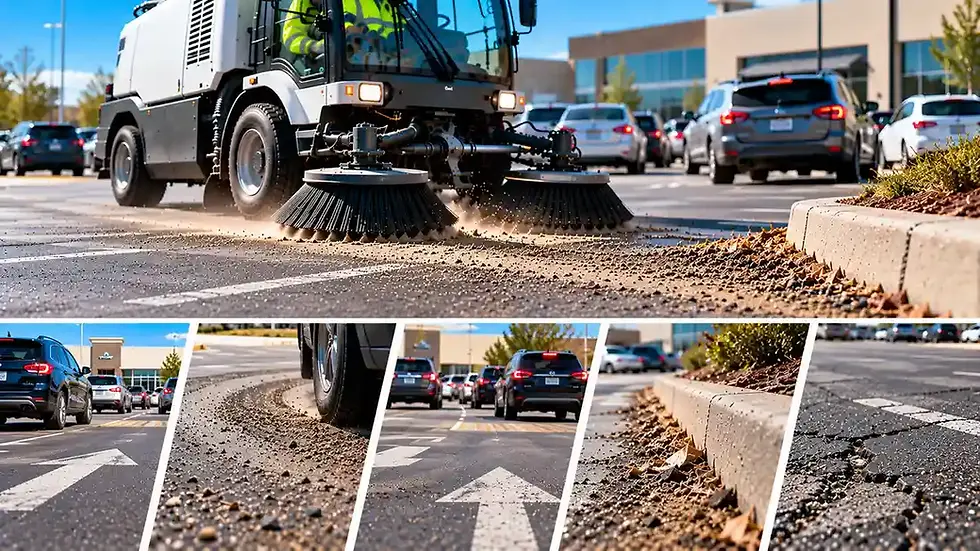
Commercial properties rarely experience the same amount of vehicle activity across every section of pavement. Main entrances, circulation lanes, intersections, pickup areas and heavily used parking rows can experience considerably more movement than perimeter spaces or less frequently travelled sections.
Those differences can influence both where loose material accumulates and where it is repeatedly displaced. Understanding how high-traffic areas affect commercial power sweeping requires looking at more than the number of vehicles using a property.
Turning, braking, queuing and repeated travel can redistribute debris, increase pavement wear and create changing access conditions. These factors can make a heavily travelled area behave differently from quieter pavement on the same site.
How Do High-Traffic Areas Affect Commercial Power Sweeping?
Concentrated vehicle activity can move loose material away from frequently travelled tire paths and toward neighbouring pavement, curbs, islands or other boundaries. At the same time, vehicles can introduce additional grit, litter and small particles from surrounding roads and other areas of the property.
The result is not necessarily a uniform layer of heavier debris. Some highly travelled pavement can appear relatively clear because material is continually displaced, while nearby sections develop concentrated accumulation.
When loose material needs to be collected across these active paved areas, commercial power sweeping for heavily used paved areas can be evaluated according to the debris distribution, pavement condition and accessibility present at the property.
Repeated Vehicle Movement Redistributes Loose Debris
Vehicle tires continually interact with material resting on pavement. Fine grit can be pushed outward from tire paths, small aggregate can shift during turning movements, and lightweight debris can be moved by the airflow created by passing vehicles.
This means the busiest part of a driving lane is not always where the largest visible deposit develops. Material can gradually migrate toward the sides of the lane, adjacent parking spaces or sections where traffic becomes less concentrated.
Repeated movement can create distinct bands or pockets of debris even when the material originally entered the property somewhere else. Examining both the travelled pavement and the areas immediately beside it gives a clearer picture of how traffic is influencing debris distribution.
Turning and Braking Areas Can Develop Different Conditions
Straight-through traffic does not affect pavement in exactly the same way as repeated turning and braking. Commercial entrances, internal intersections, drive-through routes and approaches to parking rows can experience frequent changes in vehicle direction and speed.
These movements can shift loose material differently from traffic moving consistently through a straight lane. Turning tires may push grit and small stones toward the outside of a travel path.
Braking areas can also show concentrated tire marks and pavement wear that should be distinguished from ordinary sweepable debris. Recognizing these different conditions helps prevent all visible pavement changes in a busy area from being treated as the same maintenance issue.
Entrances Can Combine Heavy Traffic With Incoming Debris
Main property entrances can experience both concentrated traffic and continuous transfer of material from surrounding roads. Vehicle tires can carry sand, grit and other small particles onto commercial pavement. Material already present near the entrance can then be moved farther into the property as additional vehicles follow the same route.
Weather can amplify this effect. Wet tires may carry different material than dry tires, while winter and early spring conditions can increase the amount of granular debris entering from public roadways. Because entrances function as transition points between different paved environments, their debris conditions can change independently from quieter sections deeper within the property.
Traffic Can Push Debris Toward Less-Travelled Pavement
One of the less obvious effects of heavy traffic is that the most noticeable accumulation may develop beside the busiest pavement rather than directly on it. Repeated vehicle movement can gradually displace loose material into parking-space edges, shoulders, curb lines or sections between common travel paths.
Once material reaches a less-disturbed area, it may remain there longer.
This can create a misleading visual pattern. A main driving lane may appear relatively clean while adjacent pavement contains significant grit or litter. For a useful assessment, the high-traffic route and the areas receiving displaced debris should therefore be considered together.
Heavy Use Can Make Pavement Wear More Visible
Frequently travelled areas can experience greater pavement stress over time. Cracking, depressions, worn surfaces and loose aggregate may become visible along repeated vehicle routes, especially where heavy vehicles turn or stop.
These conditions matter during sweeping because loose material originating from deteriorating pavement is different from debris deposited onto an otherwise sound surface.
A concentration of small aggregate near damaged asphalt may indicate that the pavement itself is contributing material.
Mechanical sweeping can collect accessible loose particles, but it does not correct the deterioration producing them. Separating pavement wear from ordinary debris helps ensure that cleaning results are evaluated realistically.
Active Traffic Can Change Sweeping Access
High traffic affects more than debris. It can also influence when pavement is sufficiently accessible for sweeping. A main circulation lane may remain continuously active during business hours, while entrances or pickup areas can experience periods of queuing.
Other high-use sections may become temporarily clearer as property activity changes throughout the day. The relevant issue is not simply whether vehicles are present somewhere on the property.
It is whether the intended sweeping area can be accessed without ongoing traffic repeatedly occupying or interrupting it. Understanding daily activity patterns can therefore provide useful context when assessing high-traffic pavement.
High Traffic Does Not Automatically Mean More Debris Everywhere
It can be tempting to assume that the busiest pavement must also contain the greatest amount of loose material. In practice, traffic can both introduce debris and move it elsewhere.
A heavily travelled lane may contain little visible accumulation while the curb beside it holds substantial grit.
Another high-use area may continually receive material from an entrance and remain visibly affected. This is why traffic volume by itself is not enough to determine pavement conditions.
Property managers can look at the type of vehicle activity, surrounding boundaries, debris sources and where material ultimately settles. Those observations provide more useful information than simply classifying an area as busy.
High-Traffic Areas Affect Commercial Power Sweeping FAQs
Do high-traffic areas always contain more pavement debris?
No. Heavy traffic can introduce material, but it can also push loose debris away from frequently travelled tire paths. Nearby curbs, parking edges and less-travelled pavement may hold more visible accumulation.
Why does grit collect beside busy driving lanes?
Vehicle movement can gradually displace loose particles toward the sides of travel routes. Once grit reaches pavement that receives less direct tire movement, it may remain there and become concentrated.
Can busy commercial entrances require different sweeping considerations?
Yes. Entrances can combine concentrated vehicle activity with material transferred from surrounding roads. Continuous traffic can also affect when the pavement is accessible for sweeping.
Does power sweeping correct pavement wear caused by heavy traffic?
No. Sweeping can collect appropriate loose material from accessible pavement, but cracks, worn asphalt and other deterioration are physical pavement conditions that require separate evaluation.
Evaluate Traffic Patterns Alongside Pavement Conditions
High-traffic areas should be assessed according to how vehicles actually move through the property. Straight travel, turning, braking and entry from surrounding roads can each influence where loose material is introduced and where it eventually settles.
The busiest pavement does not necessarily contain the greatest visible accumulation. Adjacent curbs, parking edges and less-travelled sections can reveal where vehicle activity has redistributed debris. Pavement wear and changing access should also be considered separately from the loose material itself.
When concentrated vehicle activity has contributed to loose debris across an Ontario commercial property, professional commercial power sweeping for active Ontario properties can be considered according to the traffic patterns, debris distribution and pavement conditions present.