


When Should Power Sweeping Happen Before Power Washing?
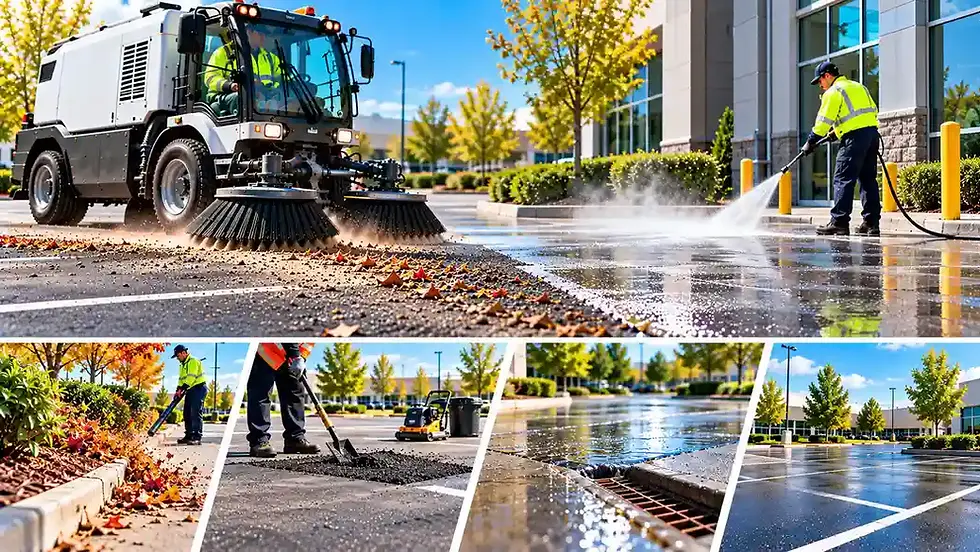
Commercial properties often require more than one type of exterior maintenance. Parking areas may need loose sand and grit removed, walkways may have adhered grime, and nearby landscaping or repair work can introduce additional material onto paved surfaces. When these activities occur close together, their order can affect how efficiently the work is completed.
The question of power sweeping before power washing is not simply which service should happen first on a calendar. It involves understanding what each activity removes, whether one operation will interfere with another, and whether the pavement will remain accessible throughout the work.
Sweeping is generally intended to collect suitable loose debris from accessible paved surfaces. Power washing addresses different cleaning conditions, depending on the surface and material involved. Other maintenance activities may create new debris or temporarily restrict access.
Choosing a practical sequence helps property managers avoid unnecessary repeated work and evaluate the condition of the pavement after each stage.
When Does Power Sweeping Before Power Washing Make Sense?
Power sweeping before power washing often makes sense when the same paved area contains substantial loose debris alongside material that requires washing. Sand, gravel, leaves and loose litter can be collected mechanically before water-based cleaning begins.
Removing this material first can reduce the amount of loose debris that water movement might otherwise redistribute. For example, a commercial parking area may contain winter grit across its driving lanes while certain sections also have adhered dirt. Sweeping the accessible loose material first can leave a clearer surface for evaluating what washing needs to address.
This order is not universal. The condition of the surface, the areas being cleaned and the work being performed determine whether the two services need to follow one another.
The important distinction is that the sequence should respond to the material present rather than assume every exterior cleaning project requires both methods.
Remove Loose Material Before Water Can Redistribute It
Loose debris can move across pavement when exposed to flowing water. If a heavily contaminated paved area is washed before suitable loose material is removed, sand, grit and lightweight litter may be displaced toward curbs, low points or drainage features.
The movement of that material does not necessarily mean it has been collected from the property. Where mechanical sweeping is appropriate, removing loose debris first can reduce the amount available for redistribution during subsequent washing.
This consideration is especially relevant after winter, when exposed pavement may contain substantial granular material left from traction treatments. However, sweeping is not a substitute for assessing drainage conditions or managing wash water appropriately. Each operation has its own practical limitations, and the condition of the site still matters.
Decide Whether Both Cleaning Methods Are Actually Needed
Not every paved surface requires sweeping and washing during the same maintenance period.
A parking lot containing mostly loose sand and leaves may benefit from sweeping without requiring power washing. Another surface may have relatively little loose debris but contain adhered grime that mechanical brushes cannot remove effectively.
Some properties contain both conditions in different locations. The decision should begin with identifying the material and where it is present. This prevents a service sequence from becoming an automatic combination of activities that may not all be necessary.
commercial power sweeping for loose pavement debris addresses one part of exterior cleaning, while commercial power washing for suitable adhered buildup addresses another.
Understanding those separate functions makes it easier to determine whether the services should be combined and, if so, in what order.
Schedule Debris-Producing Work Before Final Pavement Cleaning
Exterior maintenance can introduce new loose material onto pavement. Landscaping activities may leave soil, mulch or plant debris near paved edges. Certain repair projects can generate dust or small fragments. Material handling and other property operations may also leave debris in areas that were previously clear.
If sweeping is completed before predictable debris-producing work, the pavement may require attention again shortly afterward. A practical sequence therefore considers whether nearby work is likely to affect the same surface. For example, when suitable debris-producing maintenance is planned around a parking island, completing that activity before the final sweeping pass may reduce unnecessary repetition.
This does not mean every maintenance project must finish before any sweeping occurs. Some sites require interim debris removal to maintain appropriate conditions during ongoing work.
The useful distinction is between temporary cleaning needs and the final cleaning intended to follow a particular activity.
Consider Pavement Repairs Separately From Routine Cleaning
Pavement repairs can change both the condition of a surface and the type of debris present.
Crack repairs, patching and other work may involve surface preparation, loose material removal or restrictions on when the repaired area can be used. The appropriate cleaning sequence depends on the repair method and the requirements of the work being performed.
Sweeping may be useful before certain repairs where suitable loose debris needs to be removed. In other situations, a final cleaning may be more appropriate after the work has finished and the surface is ready for normal maintenance activity.
Fresh repairs should not automatically be subjected to mechanical sweeping or washing. The applicable material requirements and instructions from the repair contractor take precedence.
The objective is to avoid interfering with the repair while ensuring that remaining loose debris is addressed when the surface is suitable for cleaning.
Plan Around Landscaping and Grounds Maintenance
Landscaped areas frequently border commercial parking lots, access lanes and walkways.
Routine grounds work can introduce grass clippings, soil, leaves and other material onto adjacent pavement. Some of this material may remain concentrated along curbs or landscaped boundaries.
When grounds maintenance and sweeping are scheduled close together, their order can influence the appearance of the finished pavement. Completing debris-producing landscaping work before the final sweeping pass may help prevent freshly cleaned areas from immediately collecting new material.
There are exceptions. A paved area with substantial existing debris may require attention before landscaping activity can proceed efficiently. The sequence should reflect the actual tasks and the amount of material likely to be introduced, rather than following a fixed rule for every property.
Allow for Surface Conditions Between Cleaning Stages
The condition of pavement can change during exterior cleaning. Power washing introduces water, and some surfaces may remain wet afterward. Depending on the equipment, debris and pavement conditions, this can influence whether mechanical sweeping is appropriate immediately afterward.
Wet material may behave differently from dry loose debris. Fine particles can adhere to the surface, while saturated leaves and other organic material may be more difficult to collect under certain conditions. If sweeping is planned after washing, the remaining surface conditions should be evaluated rather than assuming the next operation can begin immediately.
Likewise, washing after sweeping should account for drainage, runoff and the suitability of the surface being cleaned. The purpose of sequencing is not to impose an arbitrary waiting period. It is to ensure that the next activity is appropriate for the conditions left by the previous one.
Avoid Cleaning the Same Area Repeatedly Without a Clear Reason
Repeated cleaning can sometimes be justified, particularly where ongoing work continually introduces debris. However, unnecessary repetition may occur when exterior activities are scheduled without considering their effect on the same paved surface.
A parking lane might be swept, receive debris from nearby maintenance and then require another sweeping pass. In some cases, this is unavoidable. In others, adjusting the order of work could reduce duplication. The same issue can arise when washing moves remaining loose material into areas that were already cleaned.
Reviewing the sequence helps distinguish necessary follow-up work from repeated effort caused by conflicting activities. This is particularly useful for commercial properties where several maintenance tasks are performed during a limited operating window.
Power Sweeping Before Power Washing FAQs
Should commercial pavement always be swept before power washing?
No. Sweeping first is often useful when substantial suitable loose debris is present, but it is not necessary for every washing project. The correct order depends on the surface and the material being removed.
Can power washing replace power sweeping?
Not necessarily. Washing can move loose material without collecting it in the same way as mechanical sweeping. The methods address different cleaning conditions and should be selected according to the actual debris or buildup.
sweeping happen before or after landscaping work?
Where landscaping is expected to introduce loose material onto pavement, a final sweeping pass afterward may be more practical. Interim sweeping may still be appropriate when existing debris needs attention before that work begins.
Is it appropriate to power sweep immediately after pavement repairs?
That depends on the repair material, surface condition and contractor requirements. Newly repaired pavement should not be swept until the method and equipment are suitable for the completed work.
Choose a Service Order That Matches the Work
The most useful exterior cleaning sequence begins with the condition of the pavement and the activities planned around it. When loose sand, grit or litter is present, sweeping before washing may reduce the material available for water to redistribute.
When landscaping or repairs will introduce new debris, a final sweeping pass may make more sense after those activities are complete. Neither approach should be treated as a universal rule. Surface suitability, drainage, equipment access and the requirements of other maintenance work all influence the appropriate order.
For Ontario commercial properties managing several exterior activities, professional commercial power sweeping as part of pavement maintenance can be considered at the stage when accessible loose debris needs to be collected. A clear service sequence helps ensure that each operation addresses the conditions it is intended to improve without unnecessarily undoing work already completed.