


Power Washing Commercial Entrances and Walkways
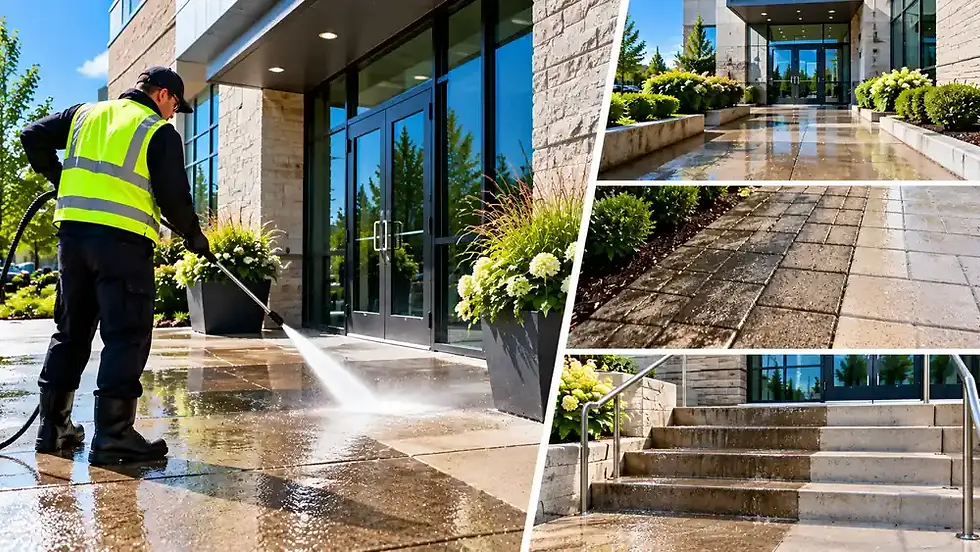
Power washing commercial entrances and walkways involves areas that can experience some of the most concentrated pedestrian activity on a property. Visitors, employees, tenants and deliveries repeatedly move through these spaces, carrying dirt, moisture and debris across exterior surfaces. Because entrances are also prominent points of arrival, changing conditions can become noticeable quickly.
Walkways present their own variations. A route may move from an open sidewalk into a covered entrance, cross different paving materials, pass landscaped areas or connect a parking lot with several doors. Exposure to weather, surrounding activity and drainage can therefore differ significantly along a relatively short pedestrian route.
For Ontario property managers, the objective is not simply to wash every pedestrian surface the same way. Surface condition, recurring buildup, property activity and the ability to perform work without unnecessarily disrupting access all influence whether professional exterior washing for commercial properties is appropriate for a particular entrance or walkway.
What Should Be Considered Before Washing Entrances and Walkways?
Commercial entrances and walkways should be evaluated according to their surfaces, condition, use and surroundings before washing begins. The physical surface is an important starting point. Concrete, pavers and other pedestrian materials can differ in texture, joints, age and existing condition. Repaired sections or transitions between materials can introduce further variation.
How the area is used matters just as much. A primary entrance serving continuous pedestrian traffic presents different operating conditions from a secondary door used occasionally. Walkways connecting parking areas to a building may receive debris and residue carried from vehicle areas, while routes beside landscaping can experience soil and organic material.
The immediate surroundings should also be considered. Doors, glazing, walls, planters, curbs, ramps and drainage features can all sit close to the area being cleaned. Reviewing these conditions beforehand helps define a washing approach based on the actual pedestrian area rather than assuming that every entrance and walkway requires identical treatment.
Pedestrian Traffic Can Change Exterior Surface Conditions
Repeated foot traffic affects where exterior buildup develops and how visible it becomes.
The highest-use route is not always the entire walkway. Pedestrians often follow consistent paths between parking spaces, sidewalks and doors. Those concentrated movement patterns can create areas that change faster than adjacent surfaces.
Entrance configuration also influences traffic. A building with several doors may have one dominant entrance. Retail and multi-tenant properties can experience different patterns throughout the day, while an office entrance may have concentrated periods around arrival, lunch and departure times.
Deliveries add another variable. Hand trucks, carts and service activity can introduce conditions different from ordinary pedestrian use. These patterns are useful because they help property managers understand why one portion of a pedestrian area may require attention before another. Rather than treating traffic as an automatic reason for more aggressive cleaning, it should be viewed as one factor influencing how quickly appropriate surfaces accumulate visible exterior buildup.
Covered and Open Entrances Can Develop Different Buildup
Two entrances on the same commercial property can develop noticeably different conditions because of their exposure. Open walkways receive direct precipitation, sunlight, wind and seasonal material. Covered entrances may receive less direct weather but can retain moisture or collect debris in protected corners and along edges. Canopies and overhangs can also create transition zones.
Water may reach the outer portion of an entrance while the area closer to the doors remains sheltered. This can produce differences in appearance across a relatively small surface.
Shade is another factor. Areas that receive limited sunlight can dry differently from fully exposed walkways, particularly where landscaping or building orientation further reduces direct sun.
These differences matter when evaluating what needs cleaning. A visible condition at one entrance does not automatically mean every pedestrian area on the property requires the same scope. Comparing covered, exposed and transitional areas can help determine where buildup is actually concentrated.
Dirt, Organic Material and Tracked Residue Can Accumulate Differently
Entrance and walkway buildup often reflects what surrounds the pedestrian route. Loose soil and landscape material can migrate from nearby planting beds. Leaves and other organic debris can collect along edges and corners. Pedestrians can track residue from parking areas toward building doors, particularly during wet conditions.
The pattern can change over short distances. A walkway beside landscaping may accumulate different material from an open concrete approach. The section immediately outside a doorway can also look different from the route leading toward it because pedestrian activity becomes more concentrated near the entrance. Loose material should be distinguished from adhered surface buildup.
Where pavement or surrounding exterior areas primarily contain loose debris, commercial sweeping for exterior pavement and debris may address a different maintenance need before washing is considered. Recognizing what is actually present helps prevent washing from being treated as the automatic response to every untidy pedestrian area.
Surface Condition Matters Around Joints, Edges and Repairs
Commercial walkways are rarely perfectly uniform throughout their service life. Joints divide concrete sections, pavers introduce numerous edges, and previous repairs can create localized areas with different textures or conditions. Curbs, ramps and transitions add further details around pedestrian routes. These areas deserve attention before washing.
A repaired section may not respond visually in exactly the same way as the surrounding original surface. Existing wear, deterioration or permanent discolouration can also remain visible after removable buildup has been cleaned. Edges are important because they often meet other materials. A walkway can border landscaping, asphalt, building walls, curbs or drainage features.
The appropriate treatment for the main pedestrian surface should not automatically be extended to everything beside it. The purpose of washing is to address suitable surface contamination, not to make physically different or weathered materials appear identical.
Reviewing condition first helps establish realistic expectations and identify areas where another maintenance response may be more appropriate.
Doors, Glazing and Entrance Components Need Separate Attention
The closer washing occurs to a building entrance, the more surrounding components become part of the planning. Doors, frames, thresholds, glazing and joints can all be located immediately beside the pedestrian surface. Decorative finishes, wall materials and entrance fixtures can further increase the number of components within a small area.
These elements should not simply receive the same treatment as the walkway. Exterior glass is a clear example. Washing the pavement near an entrance does not replace commercial window washing for entrance glass and exterior glazing when the glass itself requires appropriate cleaning. Doorways also connect the exterior directly with occupied interior areas.
Water movement near thresholds therefore deserves more attention than it might on an isolated exterior pavement section. A well-defined scope distinguishes the pedestrian surface being washed from the building components surrounding it. That distinction helps keep the work focused on appropriate exterior areas while recognizing that an entrance is a combination of several materials and systems rather than simply a piece of pavement in front of a door.
Water Movement and Drainage Affect Pedestrian Areas
Water used during exterior washing has to move somewhere. On a commercial walkway, surface slope, curbs, drains, low areas and surrounding landscaping can influence where that water travels. Entrance geometry can also affect whether water moves away from the building or remains near heavily used pedestrian areas.
Existing drainage patterns are therefore useful to observe. Areas that routinely hold water after rainfall may behave differently during washing from surfaces that drain readily. Low points can collect loosened material, while edges can direct water toward adjacent property features. The concern is not limited to the cleaning period itself.
Pedestrian areas may need to return to normal use promptly, so remaining water and loosened material should be considered as part of the condition of the area after washing.
Understanding water movement helps property managers evaluate the entrance or walkway as a complete physical area rather than focusing only on the point where cleaning equipment contacts the surface.
Property Operations Can Influence When an Entrance Is Washed
Entrances and walkways are functional access routes, not isolated cleaning areas. Tenants, customers, employees, deliveries and building services may all depend on them. A main entrance can remain active for much of the day, while another property may have alternative doors that make temporary changes to pedestrian movement more practical.
The amount of activity can influence how work is organized. An area with continuous pedestrian movement presents different conditions from a walkway that experiences predictable quiet periods. Deliveries, tenant operating hours and other exterior maintenance can also affect the practical window for washing. This does not mean every entrance requires the same operational arrangement.
The relevant question is how the specific area functions and whether the work can be completed while maintaining appropriate property access. Considering operations alongside surface conditions helps avoid defining a washing scope that makes physical sense but conflicts with how the property actually needs to function.
Commercial Entrance and Walkway Power Washing FAQs
Can commercial concrete walkways be power washed?
Many concrete pedestrian surfaces can be candidates for power washing, but suitability depends on their condition, age, repairs and surrounding components. The surface should be evaluated before selecting the cleaning method.
Why do commercial entrances become dirty faster than other exterior areas?
Entrances often concentrate pedestrian movement and receive material tracked from parking areas, sidewalks and surrounding grounds. Weather exposure, landscaping, shelter and delivery activity can create additional differences between entrance areas.
Should every walkway on a commercial property be washed at the same time?
Not necessarily. Walkways can experience different traffic, exposure and buildup. The scope can reflect actual conditions rather than automatically including every pedestrian surface because one area needs attention.
Can power washing remove every mark from an entrance walkway?
No. Removable exterior buildup can differ from permanent discolouration, weathering, repairs or physical deterioration. The existing surface condition affects what can reasonably be expected from washing.
Keep Commercial Entrances and Walkways Maintained Around Actual Use
Power washing commercial entrances and walkways works best when the cleaning scope reflects how those areas actually function. Pedestrian traffic, surrounding landscaping, weather exposure and material tracked from other parts of the property can cause conditions to develop differently from one route to another.
The surfaces themselves also matter. Joints, repairs, transitions and edges can change across a pedestrian area, while doors, glazing and other entrance components require consideration separate from the pavement being washed. Water movement and ongoing property access add practical factors that are especially important around active building entrances.
Evaluating these conditions helps property managers distinguish areas that are appropriate for washing from those needing another maintenance response. It also allows individual entrances and walkways to be addressed according to their condition rather than assuming the entire property requires identical treatment. Where suitable pedestrian surfaces have accumulated exterior buildup, exterior washing for commercial pedestrian areas can be planned around the property's surfaces, access requirements and day-to-day use.