


Preparing a Commercial Property for Power Washing
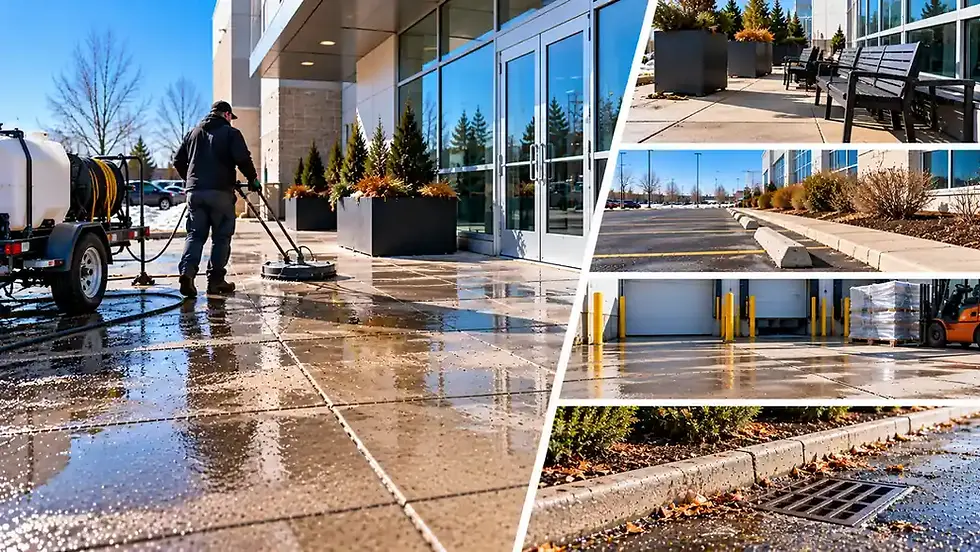
Preparing a commercial property for power washing helps ensure the exterior area is understood and ready before cleaning begins. Commercial sites contain more than the surface being washed. Entrances, landscaping, exterior fixtures, movable objects, drainage features, parked equipment and normal property operations can all affect the condition of the work area.
Preparation starts with looking at the property as it actually exists on the day of service. The intended surfaces should be identifiable, significant buildup should be visible, loose material should be distinguished from adhered grime, and objects that could interfere with the work should be addressed where appropriate. A prepared site also makes it easier to recognize conditions that deserve attention before washing starts.
Where exterior surfaces are appropriate for cleaning, professional power washing for commercial properties can then be carried out with a clearer understanding of the property and the intended work area.
What Does Preparing a Commercial Property for Power Washing Involve?
Preparing a commercial property for power washing involves reviewing both the surfaces to be cleaned and the immediate surroundings. The preparation required for a paved walkway can differ from that needed around an exterior wall, service area or entrance. Each location contains its own combination of materials, fixtures, movable objects and operating conditions.
The first objective is to make the intended work area clear.
Property managers should understand which exterior surfaces are included and whether any nearby areas require particular attention. Existing buildup, visible surface changes and obstacles should be identified before work begins rather than discovered after cleaning is underway. The surrounding area should then be considered.
Furniture, planters, waste containers, portable signs and other movable objects can occupy exterior surfaces. Landscaping can extend into the work area. Parked equipment or stored materials may limit access to portions of pavement or walls. Preparation does not mean removing everything from an entire property. It means making reasonable adjustments so the intended exterior area can be evaluated and accessed as planned.
Review the Intended Surfaces Before Work Begins
A pre-service review should establish what is actually being washed. Commercial properties often contain several materials within a relatively small exterior area. Concrete pavement can meet masonry walls, coated components, metal features, glazing and landscaped edges around a single entrance.
These materials do not necessarily have identical cleaning requirements. Visible condition also matters. Cracks, loose material, damaged joints, deteriorated finishes or previous repairs may require attention before washing proceeds. Identifying these conditions in advance creates a clearer distinction between existing surface characteristics and removable exterior buildup.
The cleaning objective should also be understood.
One area may contain general grime, while another has localized accumulation around an edge or lower wall. Knowing what condition is being addressed helps keep preparation focused on the actual work rather than assuming every nearby exterior surface is included.
Loose Debris Should Be Distinguished From Adhered Buildup
Exterior areas can contain both loose material and grime attached to the surface. Leaves, litter, sand, grit and other debris may accumulate on pavement, around curbs or beside building edges. Washing is not automatically the appropriate first response to this material.
Where loose debris is substantial, commercial sweeping for loose exterior debris can address that condition before adhered buildup is evaluated. This distinction can make preparation more effective. Removing loose material exposes the surface beneath it and can reveal whether additional cleaning is actually required.
It can also uncover cracks, joints, staining or other conditions that were previously hidden.
The result is a work area that is easier to assess. Instead of treating everything visible on an exterior surface as one cleaning problem, the property manager can distinguish material that needs to be collected from buildup that remains attached to a suitable surface
Movable Items Can Affect the Work Area
Commercial exterior spaces often contain objects that are not permanent parts of the property.
Benches, tables, planters, waste containers and other movable items can occupy walkways, patios, entrance areas and paved spaces. Seasonal furnishings or temporary property features may also be present. These objects can limit access to the surface beneath or immediately around them.
Where practical, items that can reasonably be moved should be considered before the scheduled work. This can reduce inaccessible patches and make the intended cleaning area easier to understand. Moving an object can also reveal conditions underneath it.
Protected pavement may differ in appearance from surrounding exposed surfaces.
Moisture, loose debris or accumulated material may be present beneath items that have remained in one position for an extended period. Those differences are useful to identify before washing begins. Items that cannot reasonably be moved should be recognized as part of the site conditions so expectations about the accessible cleaning area remain clear.
Exterior Fixtures and Building Features Need Attention
Not everything within a washing area is part of the surface being cleaned. Commercial exteriors can include lighting, electrical components, vents, door hardware, cameras, wall-mounted equipment, utility features and other fixtures. Building entrances can also contain glazing, seals and architectural details beside the primary surface. These components should be recognized during preparation.
The purpose is not to assume that every exterior feature creates a problem. It is to understand what is present so the work area is not evaluated as though it consists only of open pavement or a blank wall. Condition matters here as well. A loose cover, damaged component or visibly deteriorated seal can be relevant before exterior washing begins.
Identifying an existing issue beforehand allows it to be distinguished from the cleaning work itself. A careful visual review of nearby fixtures helps establish the physical boundaries and characteristics of the area before equipment is used.
Doors, Windows and Entrances Should Be Checked
Entrances bring several building components together within an active exterior area.
Doors, thresholds, glazing, frames, steps and adjoining pavement can all sit within a short distance of one another. Some entrances also include mats, portable receptacles, planters or other objects. Before washing nearby surfaces, the entrance should be visually reviewed.
Doors and windows should be closed where appropriate, and obvious issues around frames, seals or thresholds should be identified. Loose objects that interfere with the intended work area can also be addressed. The condition of the pavement immediately outside the entrance deserves attention. Tracked material, sheltered buildup and moisture can create different conditions from those on more exposed walkways.
Understanding those differences helps clarify what is being cleaned and what preparation is needed. The objective is to make the immediate entrance area ready without turning site preparation into a separate building inspection.
Landscaping and Exterior Edges Should Be Considered
Exterior cleaning areas often meet landscaping. Planting beds, grass, shrubs and trees can border walkways, building walls and paved areas. Soil and organic material can also move from landscaped areas onto adjacent surfaces. Preparation should account for where these boundaries occur.
Branches or vegetation may extend into an exterior work area. Loose leaves, mulch or soil can collect along pavement edges. Planters may occupy areas that otherwise appear open.
These conditions can affect access to the edge of the surface and the amount of loose material present.
Landscape features can also help explain why buildup is concentrated in a particular location. A shaded edge beside planting may remain damp longer than open pavement, while soil can repeatedly migrate onto an adjoining walkway. Recognizing these conditions before washing helps establish a more accurate picture of the surface and its surroundings.
Site Conditions Should Be Confirmed Before Equipment Is Set Up
A property can change between the time exterior work is planned and the day it occurs.
Temporary deliveries may occupy part of the site. Construction materials can appear near an entrance. Seasonal furnishings may have been installed. A previously open area can become unavailable because of another property activity.
For this reason, preparation should include a final review of current conditions. The intended surfaces should still be accessible enough for the planned work, and unexpected obstacles should be identified before equipment is set up. Weather and surface conditions can also change. Recent rainfall may leave low areas wet. Wind can introduce new loose debris. Temperature changes can affect exterior conditions, particularly during transitional seasons in Ontario.
The purpose of this final review is practical: confirm that the property conditions anticipated during planning still match what is actually present. If they do not, the changed condition can be addressed before work begins rather than becoming an unexpected issue midway through service.
Preparing a Commercial Property for Power Washing FAQs
What should be moved before commercial power washing?
Movable objects that interfere with the intended work area, such as certain furniture, portable planters or waste containers, can be considered for relocation where practical. What needs to move depends on the specific property and cleaning area.
Should loose debris be removed before power washing?
Substantial loose leaves, sand, grit and litter may be better removed before washing. This exposes the underlying surface and helps distinguish loose material from adhered buildup.
Should doors and windows be checked before exterior washing?
Yes. Doors, windows, frames, thresholds and nearby building components should be visually reviewed, and openings should be closed where appropriate before adjacent exterior surfaces are washed.
Why should the property be reviewed again on the service day?
Commercial sites can change after work is scheduled. A final review can identify new obstacles, temporary activities, weather-related conditions or access changes before equipment is set up.
Prepare the Work Area Before Commercial Power Washing Begins
Good site preparation creates a clearer starting point for exterior washing. The intended surfaces can be reviewed for existing conditions, loose material can be separated from adhered buildup, and movable objects can be addressed where appropriate. Entrances, fixtures, landscaping and exterior edges can also be considered according to their relationship with the work area.
A final review on the service day confirms that the property still reflects the conditions anticipated when the work was planned. These steps do not require turning preparation into an unnecessarily complicated process. Their purpose is to make the cleaning area understandable and reasonably ready before equipment is set up.
When appropriate exterior surfaces are accessible and the immediate work area has been prepared, commercial power washing for prepared exterior areas can proceed according to the conditions present at the property.